Central Intelligence Agency
All the Old KnivesThe Central Intelligence Agency is both an intelligence service and the institutional logic governing the novel’s Vienna station: it collects information through sources and local networks, assesses threats, and advises partner governments, yet its secrecy can impede cooperation and make accountability elusive. During the Flight 127 crisis, its personnel receive warnings and a courier’s reports but fail to protect the source from exposure; later, an internal investigation shows how suspicion can harden into a judgment that the Agency does not intend to submit to a court.
Identity and Work in Vienna
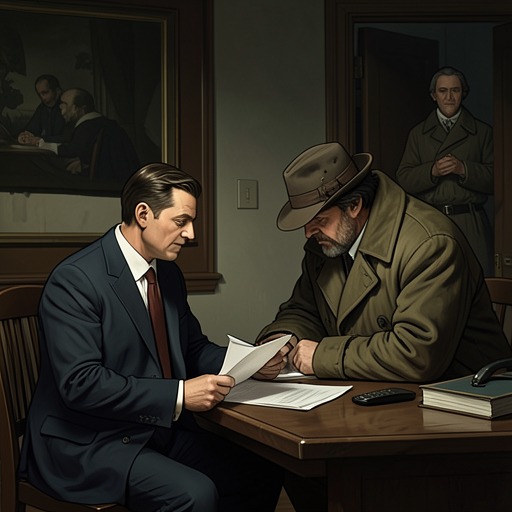
The Agency’s Vienna operation is portrayed through its staff and their work rather than through a formal organizational chart. Henry Pelham arrives in Vienna in 2003 after leaving Moscow, where he had been present during the Dubrovka Theater hostage crisis. Celia Favreau had reached the city the year before, after working in Dublin. Their different routes into the station place them within an organization whose personnel carry the consequences of earlier assignments into new ones.
By 2005, Celia had moved from nonofficial to official work and had spent more than a year working with Bill Compton to monitor networks in Vienna, including some she had helped establish. Their sources and contacts extended across the Muslim and Russian communities, local criminal circles, and Austrian politics. The Agency’s collection on the Bundesversammlung had become substantial enough that Ernst Pul, an Austrian intermediary, sought information from Bill and Celia rather than relying on his own networks. The station’s work therefore involved more than gathering reports: its accumulated political knowledge could become a resource for local partners.
That collection was uneven. Celia describes the Muslim community as largely peaceful and fearful, while Russian networks included people she characterized as spies. Local gangsters occasionally assisted, but offered little hard intelligence. The contrast shows the practical texture of station work: different communities and contacts yielded different kinds of access, and no single network supplied a complete picture.
Threat Reporting and the Flight 127 Crisis
The Agency’s threat assessment begins with a report from a source called TRIPWIRE, relayed from Damascus station. It warned of an airline-related event within seventy-two hours on a flight heading to Austria or Germany, with Damascus, Beirut, and Amman among possible departure points. The report named Aslim Taslam, a group formed by former members of Somalia’s Al-Shabaab after an ideological split. The group had sought financial and logistical support from Ansar al-Islam and had been linked to deadly attacks in Rome, Nairobi, and Mogadishu.
The warning was not treated as self-validating. Bill Compton remembered that TRIPWIRE had supplied false information in 2004, leading the station to waste time urging the Austrian Interior Ministry to raid an empty warehouse. He estimated that the new report had an eighty-percent chance of being another fabrication. A separate report concerning a Saudi-passport holder who had arrived in Barcelona from Jordan made the warning harder to dismiss: analysts believed the traveler was Ilyas Shishani, a Chechen radical associated with Ansar al-Islam and a possible operational planner. The episode presents intelligence as a process of comparing uncertain sources, not simply receiving a warning and acting on it.
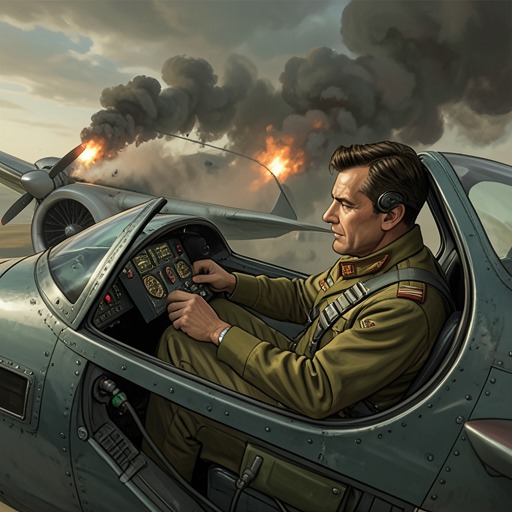
The warning became an immediate crisis when Royal Jordanian Flight 127, traveling from Amman, landed in Vienna. The four hijackers identified themselves as members of Aslim Taslam; after landing, Suleiman Wahed shot a stewardess, Raniyah Haddadin. The aircraft carried 120 passengers and crew. The hijackers demanded the release of five prisoners—two in Austria and three in Germany—within forty-eight hours. The Agency’s staff had to weigh the threat to passengers against the political stakes for the governments receiving the demand.
Five hours after the hijacking began, Ahmed Najjar, an Agency courier aboard the plane, sent a text to an emergency Langley number. He reported the number of attackers and guns, the passengers’ arrangement, two women in critical condition, dwindling water, and the absence of power and cameras; he proposed an assault through the rear landing gear. The message gave the Agency an unusually direct view of conditions inside the aircraft. Henry Pelham, however, warned that the hijackers had called the media and would expect the outside world to watch. A visible media presence could make an assault harder to conceal, and speculation that authorities were preparing to storm the plane could itself affect the crisis.
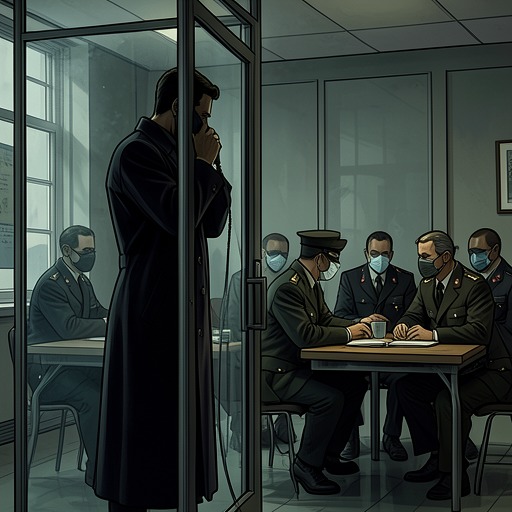
The Agency’s information advantage was constrained by mistrust of its partners. When Celia suggested sharing information with the Austrians, Bill explained that they had not been told about Ahmed because the station did not know whether the Interior Ministry could be trusted; its personnel had not been vetted. This withholding protected the courier’s identity from an unvetted service, but it also narrowed the circle able to act on the information. The scene makes the costs of compartmentalization concrete: the Agency possessed a source inside the aircraft while its allied authorities lacked knowledge of him.
Source Protection and the Suspected Leak
The text messages eventually raised the possibility that Ahmed had been discovered. His first reports were terse and grammatically incomplete; the fourth used complete sentences, articles, and the more deliberate phrasing of someone other than the earlier sender. Henry concluded that the final message was not Ahmed’s and that the courier had been exposed. Because the hijackers had apparently learned something about him, the crisis also became an investigation into the security of the Agency’s own information.
Celia reasoned that the hijackers might be receiving information from inside the Vienna station. Ahmed worked solely for the Agency, and, according to Ernst Pul, his identity had not been shared with the Austrians. The number of people inside the office who could know his identity was therefore limited. Celia considered whether information might have come from Langley but set that possibility aside as beyond her ability to investigate, focusing instead on the Vienna office. Since the lead hijacker spoke Russian and Henry was the office’s only fluent Russian speaker, suspicion turned toward him. These are presented as inferences under pressure, not as independently verified proof of who exposed Ahmed.
Years later, the Agency’s internal records become central to Henry’s renewed investigation of Celia. He concludes that she had seen a phone-call record and withheld it, a conclusion supported in his mind by Gene Wilcox’s help in locating the relevant logs and by Bill’s admission that Celia had not brought the recording to him. Henry accuses her of calling Ilyas Shishani and telling him about Ahmed, thereby destroying the passengers’ only chance of rescue. Celia’s response does not confirm the allegation. The distinction matters: the novel shows Henry arriving at a consequential verdict, but the exchange does not turn his interpretation into an uncontested fact.
Authority, Secrecy, and Consequences
The Agency’s power is most starkly expressed in its handling of suspected traitors. Henry reasons that the Agency cannot let them go but cannot prosecute them, and he treats this as a practical institutional rule. He has already decided to have Celia killed before he asks her for a final answer, seeking a justification that might protect him if Vick or someone at Langley later connects him to the act. The private operation he authorizes against her is thus not an official trial or an open disciplinary process; it is his attempt to apply what he calls Agency logic beyond the bounds of legal accountability.
The institution’s obligations also reach beyond the Vienna crisis. After leaving intelligence work, Celia lives in California with her husband, Drew Favreau, and their children, Evan and Ginny. She says that the Agency had largely left her alone during the five years since her departure, though Karl Stein visited shortly after the family arrived and called again in June about an enemy’s capture. Her new life does not erase her former one: Bill later warns her that Henry is pursuing her, and the threat draws her back toward the world she had left.
A separate reckoning reveals another form of institutional betrayal. Ilyas Shishani tells Henry that his interrogators knew intimate details about Henry’s relationship with him—details that surveillance could not have supplied. Henry denies personally disclosing those details, then explains that he had acted under orders during a politically difficult period, had protested, and later sent a letter of complaint to Langley. The explanation does not undo the betrayal from Ilyas’s perspective. It instead exposes a gap between an individual’s protest and an institution’s action: the Agency can issue an order, while the person who carries it out is left to account for the damage.
Across these episodes, the Central Intelligence Agency is neither simply an efficient source of answers nor merely a faceless bureaucracy. Its reports can connect a warning to a real threat, and its human source can provide details unavailable from outside the aircraft. But the same system restricts information to trusted circles, struggles to distinguish deception from intelligence, and leaves grave suspicions outside ordinary legal review. The unresolved accusation against Celia and Henry’s explanation to Ilyas give that system its defining tension: secrecy may be a tool of intelligence work, but it also shelters decisions and betrayals from the scrutiny that could establish what truly happened.